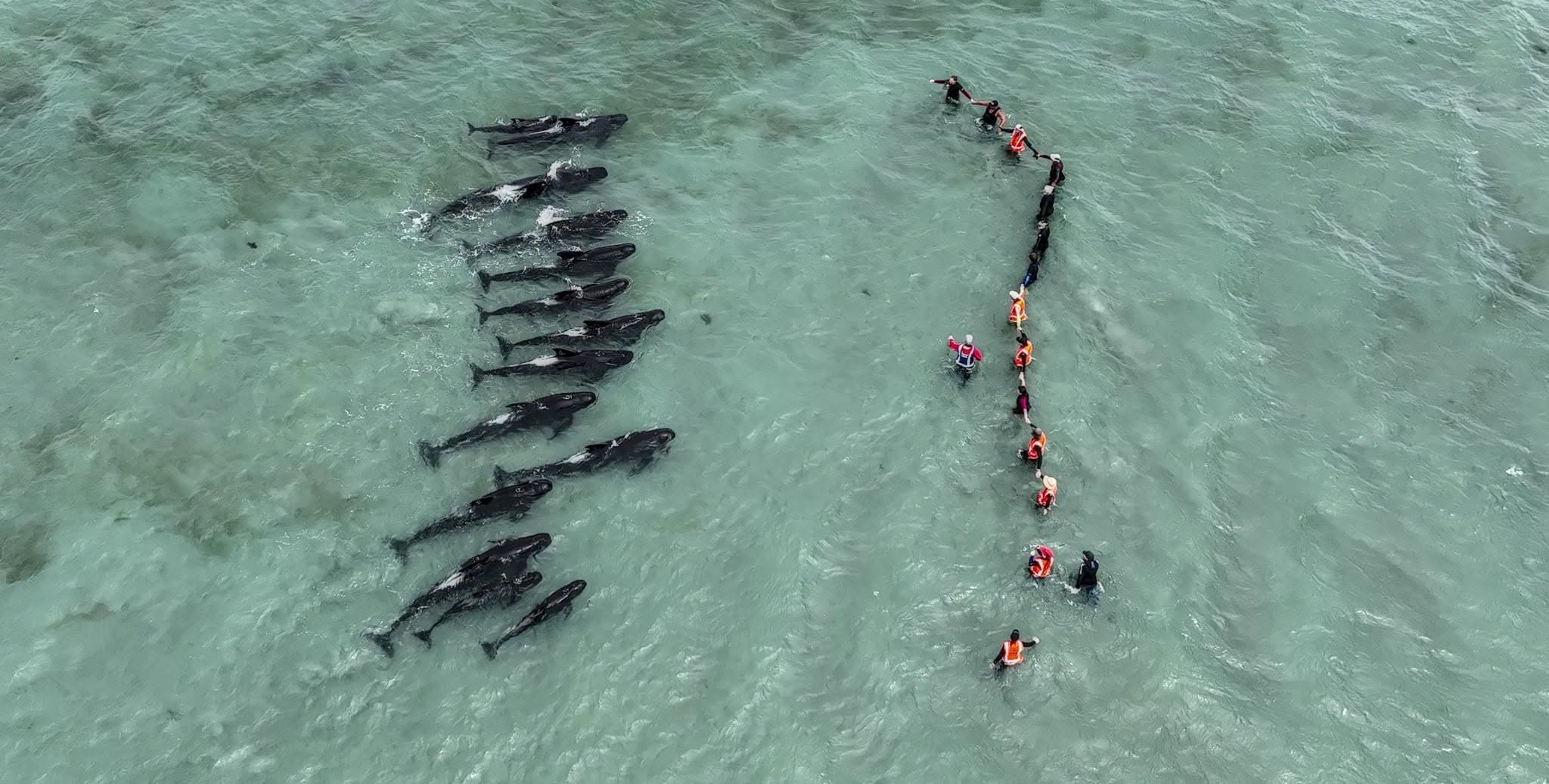
Image (captured on high zoom) taken under Department of Conservation permission by Daniel Manchester for CERG research purposes.
When an incredible photograph of 14 pilot whales swimming towards a chain of people in the water was recently shortlisted for the New Zealand Geographic Photographer of the Year, many people saw an extraordinary moment.
But the photograph only captures a few seconds of a much bigger story.
Behind it was a five-day response at Onetahua/Farewell Spit involving Project Jonah Marine Mammal Medics, Department of Conservation (DOC) staff, Manawhenua ki Mohua, Cetacean Ecology Research Group (CERG) researchers, local volunteers and members of the community.
Over five days, whales stranded and re-stranded at several locations around Farewell Spit and Pūponga. Multiple refloat attempts were made as teams monitored the whales’ condition and movements, working with the tides and changing conditions.
It was physically and emotionally demanding work, here is the story of what happened.

Image: Project Jonah.
8 January – The initial stranding
Early afternoon, Project Jonah was notified that a pod of pilot whales was swimming in shallow water and heading towards Farewell Spit.
Local Marine Mammal Medics responded alongside DOC staff and a response boat, while Manawhenua ki Mohua were also notified. Despite efforts to keep the whales away from the shallows, 53 pilot whales eventually stranded across two sites on Farewell Spit and 10 are seen in the shallows.
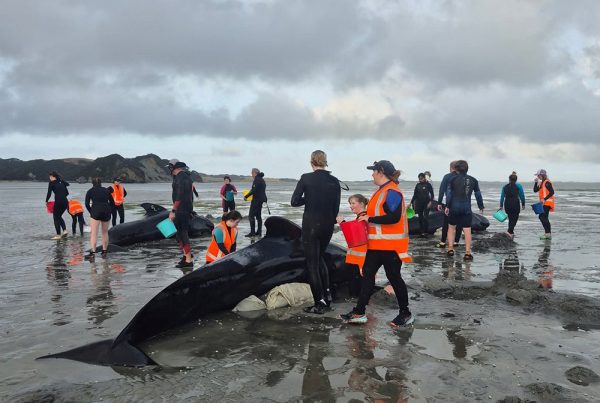
Volunteers and responders cared for the whales through the afternoon, keeping them cool and monitoring their condition until dark. Teams prepared to return at first light.

Image (captured on high zoom) taken under Department of Conservation permission by Daniel Manchester for CERG research purposes.
9 January – Whales restranded
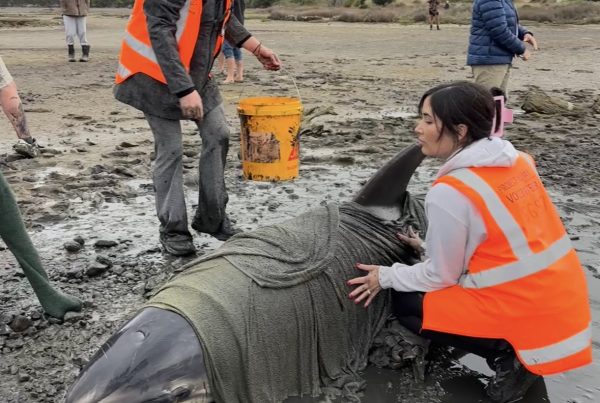
Returning to the beach at first light, teams found 21 whales, 15 of which were alive and stranded. The whales were cared for throughout the morning until the incoming afternoon tide.
During the afternoon refloat, more than 200 people spent four hours in the water helping guide the group of 15 pilot whales towards deeper water. Cetacean Ecology Research Group (CERG) also monitored the pod by drone.
The whales slowly and steadily moved out of the intertidal zone. They were last seen around 1.3 kilometres offshore, travelling southwest towards Collingwood.
Project Jonah and DOC teams remained onsite into the evening and continued monitoring the whales overnight.

Image: Bare Kiwi
10 January – Re-stranding and refloat attempt
The group of 15 pilot whales re-stranded at Farewell Spit. The whales were showing signs of fatigue and stress.
Teams continued to keep them cool and comfortable while limiting the number of people around them.
During the afternoon, Project Jonah Marine Mammal Medics, DOC, Manawhenua ki Mohua, CERG, Tasman Bay Guardians and community volunteers worked together to refloat the whales.
The whales remained free-swimming for around two hours and travelled approximately two kilometres west from Farewell Spit. They were monitored from a boat and by drone, but eventually re-stranded on a sandbar near Pūponga.
A ground team responded quickly and worked to refloat the whales again. However, the tide was dropping fast, and five of the largest whales remained stranded.

Image (captured on high zoom) taken under Department of Conservation permission by Daniel Manchester for CERG research purposes.
11 January – Two stranding sites
This morning 14 live and one dead whale were found stranded at two locations: Pūponga and Farewell Spit.
This is now the fourth day of the response. DOC, CERG and Project Jonah carried out welfare assessments while volunteers continued caring for the whales and keeping them cool and comfortable.
During the afternoons refloat operation, the whales at Pūponga were moved approximately five kilometres to reunite with the group at Farewell Spit.
At one point the pod grounded again, but a quick response from the team kept the whales swimming with the outgoing tide. Once the groups were reunited, the whales became highly vocal before slowly swimming parallel to Farewell Spit for several hours.
They were last seen swimming along the Spit but still near the low-tide line.
Teams prepared to return at first light.

Image: Project Jonah.
12 January – Welfare decision
This morning the pod of 14 whales were found, two whales had died overnight and 12 had restranded approximately four kilometres along Farewell Spit.
The remaining whales were assessed by DOC, CERG and Project Jonah, in consultation with Manawhenua ki Mohua.
After five days of repeated strandings and refloat attempts, the decision was made to euthanise the remaining whales as the most humane course of action. The whales are very tired and showing signs of acute stress. With poor weather conditions for refloating today, they are not expected to be able to survive another refloating attempt.
This is not the outcome we had hoped for, but the decision has been made with the welfare of the whales in mind.
This has been a huge community response and we want to thank every single person who has helped.
Across the event, 42 whales were successfully refloated.

Image: Project Jonah.
Why do pilot whales strand at Farewell Spit?
Farewell Spit is a known hotspot for pilot whale strandings.
The shape and geography of the Spit can create what has been described as a natural “whale trap”. The area has extensive intertidal sand flats and gently shelving offshore waters, which can make it difficult for whales to judge how shallow the water is. As the tide falls rapidly, whales can become stranded before they are able to reach deeper water.
Pilot whales also have strong social bonds. If one whale moves into shallow water, other members of the group may follow, contributing to the large numbers sometimes seen in mass strandings.
Find out more here: https://www.projectjonah.org.nz/why-whales-strand-1/