Mohua / Golden Bay, Aotearoa / New Zealand
An AI-powered marine mammal detection buoy has been deployed in Mohua / Golden Bay to help detect pilot whales before they strand, giving responders a vital head start in one of the world’s hotspots for mass strandings.
The community-led project, called Pilot Pulse, listens continuously for the calls of pilot whales and dolphins. When these are detected, it will send real-time alerts to responders on shore so they can prepare sooner, potentially reducing whale suffering and mortality.
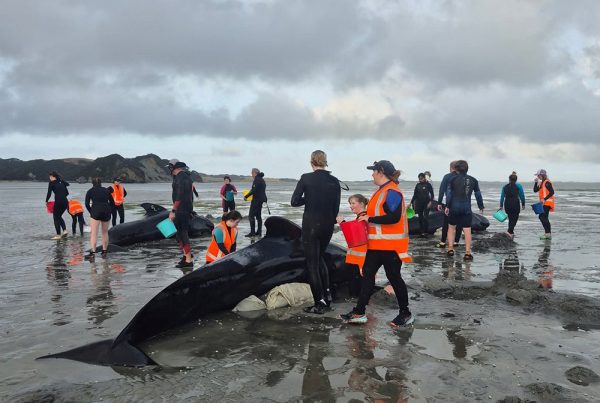
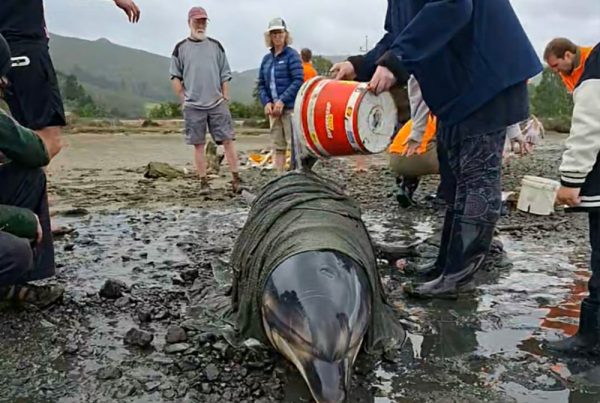
Golden Bay is recognised globally as a high-risk area for long-finned pilot whale strandings. The sweeping curve of Onetahua / Farewell Spit forms a natural trap, where whales can quickly become disoriented in shallow water. Along this remote, sparsely populated coastline, whale strandings are often only discovered once many animals are already well ashore. A reliable early-warning system could help change that, improving their chances of survival while also contributing to a better understanding of stranding-related behaviour.
Pilot Pulse is a collaboration between HealthPost Nature Trust, Project Jonah, marine acoustician Dr Matt Pine of Cetaware, and retired Department of Conservation (DOC) ranger Hans Stoffregen. The project has been supported by DOC Tākaka, Manawhenua ki Mohua and the Yondi Foundation. It is an example of community-led conservation in action, empowering local volunteers and with cutting-edge technology.

After several years of feasibility studies, the project’s first buoy was deployed on 8 December 2025. It is funded to operate through the 2025/26 summer stranding season, building a unique acoustic picture of whale and dolphin behaviour in the bay while providing real-time alerts to responders. Project data may be added to national databases and shared for other research purposes.
“Project Jonah has spent countless summers responding to mass pilot whale strandings in Golden Bay,” says Daren Grover, General Manager of Project Jonah. “Having reliable, early detection of pre-stranding behaviour could be a game changer. It gives us precious time to prepare, respond, and potentially reduce the scale of these events. We’re also excited by the wider possibilities of this technology, including its potential to alert commercial vessels to the presence of large whales along our coastlines, improving protection for marine mammals nationwide.”
“Anyone who has witnessed a mass stranding knows pilot whales are highly social animals that rely on close communication within their pods,” says Abel Butler of the HealthPost Nature Trust. “For the first time in Golden Bay, we have access to a buoy-based acoustic
detection system with real-time transmission, so offshore whale activity can be shared on shore as it happens. It’s exciting to bring leading marine science and AI together with very local, very human efforts here in Mohua, and after a few years of steady work it’s deeply satisfying to see something so tangible in the water.”
How Pilot Pulse works
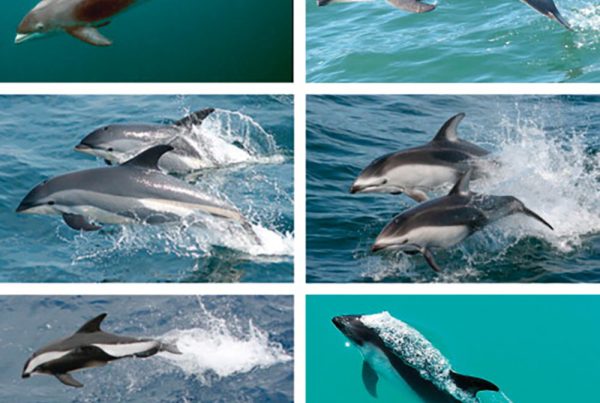
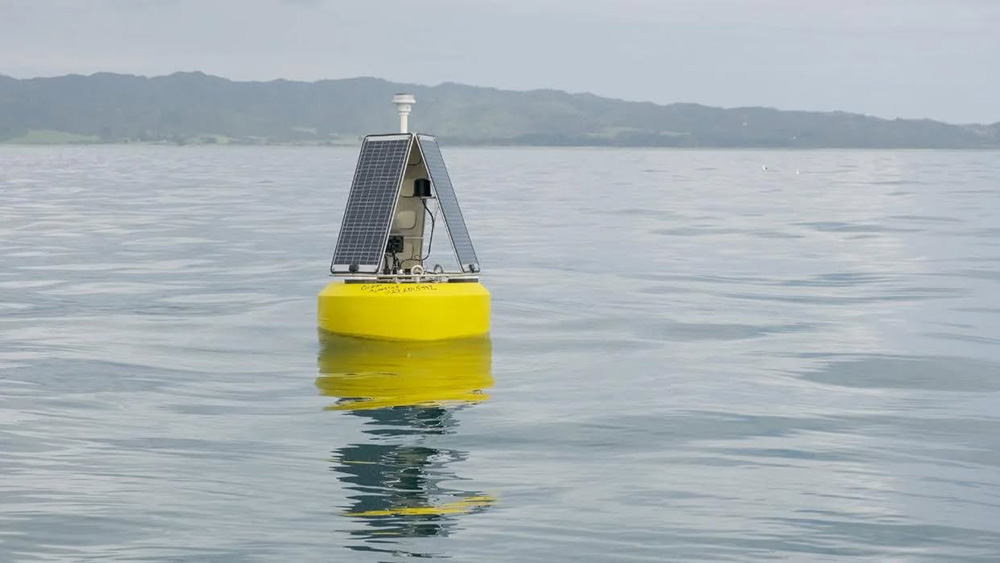
The Pilot Pulse system uses an underwater microphone (hydrophone) mounted below a solar-powered buoy to listen for the clicks and whistles of pilot whales and other delphinid species. A custom AI model, trained on recordings gathered from around New Zealand (including Golden Bay), and overseas, analyses the sound in real time. When vocalisations are detected with sufficient confidence, the system logs the event and sends alerts and audio to land-based servers, as well as via email or text to local responders for further assessment. The system will be continually fine-tuned, with updates pushed to it remotely, making it an increasingly accurate tool.
The detection technology was developed and made available for the Pilot Pulse project by Cetaware, a NZ company specialising in real-time acoustic monitoring and signal detection. It’s already been proven to be effective, including in Whangārei Harbour, where a similar system is used to detect marine mammals in shipping channels. Lessons from that deployment, combined with hundreds of thousands of hours of passive acoustic monitoring data, have shaped the current Pilot Pulse buoy configuration and site selection.
Powered by local and national partners
The buoy hull, a state-of-the-art NexSens CB-450 platform, has been loaned to the project by Cetaware and customised for Golden Bay conditions with upgraded batteries, solar panels, navigation light and onboard data processing. A heavy-duty mooring was designed and built by Kevin Primmer (Tuff Buoys), and the buoy was deployed with dedicated vessel and crew support from Sanford Limited.
This project is a true collaboration, bringing together local knowledge, cutting-edge science and dedicated volunteers. Pilot Pulse is a partnership between Project Jonah, HealthPost Nature Trust, marine acoustician Dr Matt Pine (Cetaware), and Hans Stoffregen, with support from DOC Tākaka, Manawhenua ki Mohua and the Yondi Foundation.
The initiative is currently funded for a six-month trial period, covering customisation, deployment and monitoring for the 25/26 Summer stranding season. Additional support is needed to extend the programme and refine the technology over future years.
In early January we experienced a mass stranding in this exact area. Pilot Pulse was in learning mode during this time and data was recorded throughout the five day event. This data gives us a rare opportunity to analyse communication before, during and after a stranding, helping grow our understanding of what may be happening beneath the surface.
We’re incredibly grateful to the funders and supporters who have made Pilot Pulse possible. This is community-led conservation in action – combining technology, partnership and care for our marine mammals.